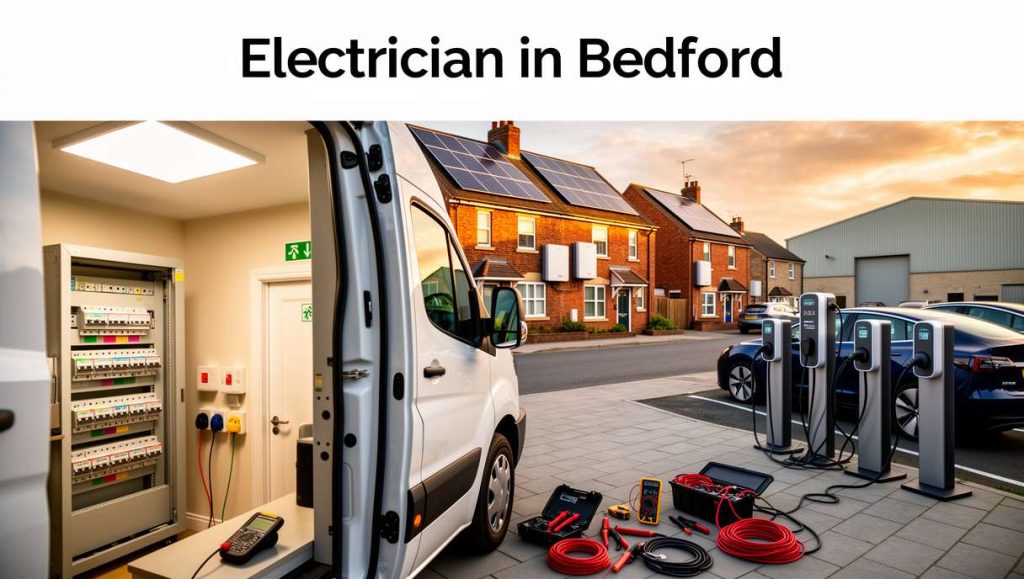
Electrician in Bedford: Powering Safety, Efficiency and Modern Living
From Victorian terraces near the Embankment to new builds in Wixams and busy sites around Priory Business Park, Bedford’s mix of properties demands electrical work that is both safe and forward-thinking. A dependable, local specialist helps households and organisations keep pace with current standards while improving comfort, reliability and energy performance. Whether it’s a consumer unit upgrade, whole-house rewiring, LED lighting design, EICR inspections, or integrating EV chargers, solar panels and battery storage, the right expertise makes all the difference. The focus is always on compliance with the latest wiring regulations, neat workmanship, and solutions that reduce running costs without compromising safety.
Choosing a trusted partner means your project is approached methodically—from initial survey and design through to installation, testing and ongoing maintenance. It’s about more than lights that switch on and sockets that work: quality electrical services protect your property, support your day-to-day routines, and help you make smarter use of energy now and in the future.
Domestic electrical safety, upgrades and smart energy for Bedford homes
Homeowners across Bedford—Kempston, Brickhill, Biddenham, Bromham and beyond—often want two things at once: uncompromising safety and a home that’s easier and cheaper to run. A modern consumer unit upgrade with RCD protection and surge protection brings a property in line with current standards, sharply reducing the risk of electric shock and safeguarding sensitive electronics. Paired with targeted fault finding, homeowners can resolve nuisance tripping, overheating accessories or unexplained circuit issues before they become bigger problems.
In older properties, especially those with fabric wiring or mixed-age circuits, full or partial rewiring can be transformative. New cabling, correctly rated MCBs/RCBOs and robust earthing provide a safer foundation for appliances, heating and technology. Many households also choose LED lighting to cut energy use by a significant margin while improving brightness and ambiance—think warm, dimmable LEDs in living areas and high-CRI task lighting in kitchens. Combined with smart controls, this can create scenes for cooking, movie nights and bedtime routines, all while saving energy.
Landlords and homeowners aiming to document compliance should schedule regular EICR reports (Electrical Installation Condition Reports). These inspections identify defects, deterioration and non-compliances so remedial works can be prioritised. For landlords in particular, up-to-date reports support legal obligations, help protect tenants and reduce maintenance surprises. Portable Appliance Testing (PAT testing) complements this where lots of plug-in devices are used.
Electric mobility and renewables are increasingly common in Bedford. Professionally installed EV chargers with proper load management protect your supply while delivering faster, safer charging. Meanwhile, solar panels and battery storage help households capture daytime generation and use it in the evening, shaving peak electricity costs and increasing independence from the grid. When these systems are designed together—coordinating main fuse capacity, protective devices and cable runs—you get a tidy, future-proof setup. For tailored options and a clear plan of works, speak with an Electrician in Bedford who understands local housing styles, grid constraints and the latest best practice.
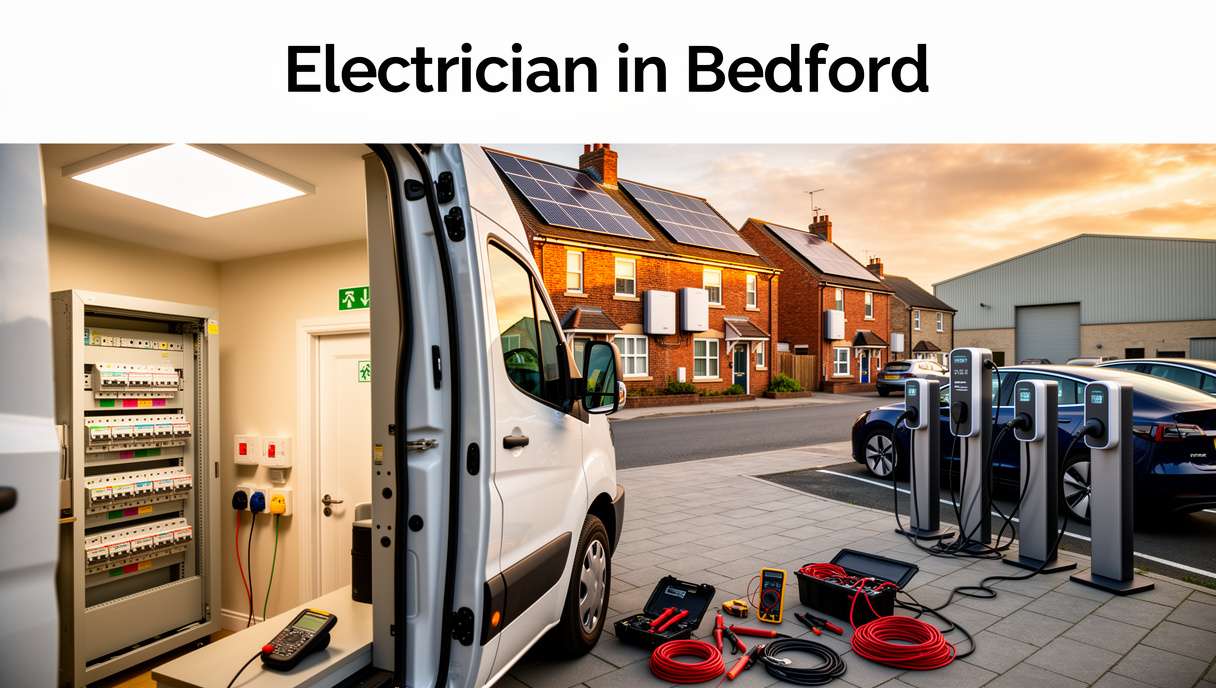
Commercial and industrial electrical solutions that keep Bedford businesses moving
Offices, hospitality venues, schools and industrial sites around Bedfordshire rely on dependable power and lighting to keep people productive and safe. From Priory Business Park to high-street retail and warehouses along the A421 corridor, the electrical priorities are remarkably consistent: robust distribution, minimal downtime and verifiable compliance. That starts with careful design—sizing circuits for existing and future loads, selecting appropriate protective devices, and planning containment so upgrades and maintenance are straightforward.
For commercial environments, periodic EICR inspections and routine RCD testing confirm that protection devices trip within required times, emergency arrangements are intact and circuits remain fit for purpose as layouts evolve. Emergency lighting is essential in shared spaces, corridors and exit routes, and scheduled testing ensures luminaires operate during outages when they are needed most. Many sites also benefit from proactive PAT testing, especially where equipment is frequently moved or used by different staff members.
Lighting upgrades are one of the fastest ways to save money in larger buildings. Replacing older fittings with high-efficiency LED lighting, paired with occupancy and daylight sensors, can reduce consumption dramatically while improving colour rendering and comfort. In warehouses, high-bay LEDs deliver even illumination for safer picking and packing; in offices, low-glare panels and task lights support screen work. A recent example: a small logistics unit near Woburn Road Industrial Estate replaced ageing metal halide fittings with LEDs and added zoned controls—cutting lighting energy use, improving visibility for forklift operations and reducing maintenance callouts due to failed lamps.
When faults occur, structured fault finding and testing isolate issues quickly—whether it’s a persistent breaker trip on a three-phase board, a neutral-to-earth fault, or deterioration in cabling exposed to temperature swings. Clear reporting and remedial action plans keep managers informed and enable targeted fixes, while planned maintenance visits can catch wear-and-tear before it impacts trading. Above all, good electrical contracting for businesses is about repeatable processes: risk assessments, method statements, as-fitted drawings and certification that stand up to audits and insurer scrutiny.
Renewables, compliance and future-proofing: making the most of modern standards
Bedford’s push toward energy efficiency is accelerating, and electrical systems are at the heart of it. Solar PV combined with battery storage helps sites shift from daytime generation to evening consumption, flattening peaks and making better use of local energy. When designed with whole-site protection in mind—correct earthing, overcurrent and surge protection, and integration with monitoring—renewables become a seamless part of everyday operations rather than a bolt-on. Add smart metering and you gain real-time data to optimise when loads run, whether that’s charging an EV overnight on cheaper tariffs or staggering high-draw equipment to stay within supply limits.
Compliance underpins every upgrade. Adhering to the current edition of the UK wiring regulations (BS 7671) isn’t a checkbox—it’s the baseline for safety and performance. EICR reports verify the ongoing condition of existing systems, while commissioning certificates prove that new installations meet design and test criteria. Surge protection devices support sensitive electronics; correct RCD and RCBO selection reduces nuisance trips while protecting users; and thoughtful circuit separation prevents one issue from taking out critical systems. For properties with emergency routes—schools, HMOs, hospitality—planned emergency lighting testing ensures illumination is available when the mains fails.
Case in point: a Bedford café modernised its distribution board, added dedicated circuits for coffee machines and refrigeration, and installed LED track lighting with warm, high-CRI lamps to enhance product displays. The team also introduced scheduled RCD testing and updated fire-escape lighting. The result was fewer interruptions, better ambience and clear documentation for inspections and insurers. In a residential scenario, a family in Kempston added a 7 kW EV charger with load management and later expanded to a rooftop solar array plus battery. Their updated consumer unit, coordinated protections and simple app-based monitoring keep charging, solar generation and household loads in balance.
Future-proofing goes beyond adding capacity; it’s about flexible infrastructure. Conduits and containment that allow for extra circuits later, distribution boards with space for additional ways, and cable routes placed to support later technologies help avoid disruptive refits. Whether it’s preparing for more EVs, electrified heating or on-site generation, a well-planned installation pays dividends. With an emphasis on quality workmanship, testing and maintenance, and energy-smart design, Bedford properties can stay safe, cut costs and be ready for what’s next—without compromising everyday reliability.

Lisboa-born oceanographer now living in Maputo. Larissa explains deep-sea robotics, Mozambican jazz history, and zero-waste hair-care tricks. She longboards to work, pickles calamari for science-ship crews, and sketches mangrove roots in waterproof journals.