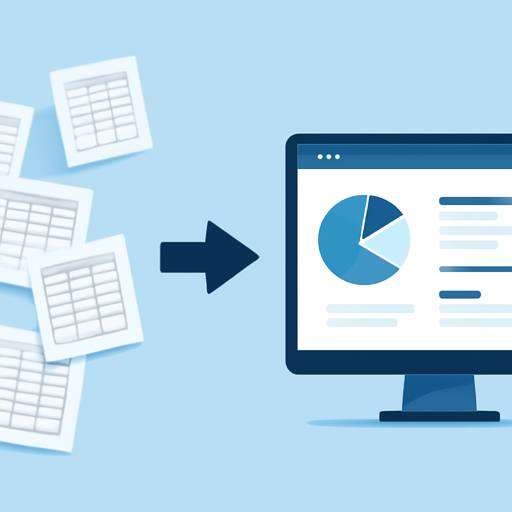
From Fragmented Spreadsheets to Focused Deal Flow: How a Modern Deal Sourcing Platform Transforms M&A
Finding the next great acquisition or investment shouldn’t feel like stitching together spreadsheets, PDFs, email threads, and siloed databases. Yet that’s how many teams still operate—burning time on manual research, duplicate entries, and version confusion while competitors move faster. A modern deal sourcing platform reverses that dynamic. It centralizes the entire origination lifecycle in one place, augments research with AI, and enforces the governance today’s regulatory environment demands. The result is a calmer, smarter pipeline where the highest-impact opportunities rise to the top—and nothing critical slips through the cracks.
In Europe, where trust, data protection, and long-term relationships matter, technology must align with local norms as much as it accelerates processes. An M&A workspace that respects EU data residency, interprets multilingual sources, and fits comfortably into established deal etiquette gives teams an edge. It lets analysts, associates, partners, and corporate development leaders spend more hours in conversations that count and fewer on repetitive, error-prone tasks.
The Core Capabilities That Turn Noise Into Qualified Deal Flow
At its heart, a deal sourcing platform is a system of record and a system of intelligence. It starts by unifying target lists, market maps, and contact histories across internal spreadsheets, public registries, data providers, and proprietary notes. Entity resolution de-duplicates companies and people, normalizes firmographic fields, and creates a single, living profile for every prospect. Sector taxonomies tuned to European markets—think granular classifications for industrials in Flanders or deep-tech in Wallonia—bring order to the long tail of mid-market targets that standard NAICS-like codes often miss.
With clean data in place, advanced search and alerting eliminate hours of manual scanning. Teams set thesis-aligned parameters—revenue ranges, ownership structure, export footprint, carbon disclosures, or vertical niches—and receive proactive updates as new companies emerge, signals change, or filings update. Embedded web and document crawlers compile a documentary trail (press, product pages, leadership interviews), while note templates capture every call, NDA, and meeting in context. Instead of toggling between tabs, dealmakers review a complete story thread on a single screen.
Pipeline execution is just as important as origination. A platform should support configurable stages from first contact through LOI, diligence, and signing, with role-based access that respects confidences between sponsors, advisors, and co-investors. Email and calendar sync keep timelines honest; no more chasing who sent what and when. Auto-generated teasers and one-pagers, drawn from structured profiles and enriched with public domain facts, accelerate outreach while maintaining a consistent brand voice. When conversations progress, the same workspace tracks document requests and redlines, eliminating hand-offs that cause costly delays.
Coverage depth matters in Europe’s fragmented market. Teams need multilingual enrichment and local data nuances: Belgian Crossroads Bank of Enterprises identifiers, Benelux chamber filings, DACH registry structures, and regional press sources. Harmonizing these inputs prevents bias toward heavily publicized geographies and helps identify quieter, family-owned companies that are perfect fits for buy-and-build strategies. For many firms, the practical move is to adopt a unified deal sourcing platform rather than stringing together tools that were never designed to work together.
AI-Powered Prioritization and Outreach—Without Losing Human Judgment
The most valuable commodity in M&A isn’t data; it’s judgment. AI should therefore augment, not replace, human decisions. In a well-designed platform, machine learning accelerates triage and discovery, then gets out of the way. Vector similarity models compare targets to past wins and current theses, surfacing “lookalike” companies that fit nuanced preferences (channel mix, product architecture, regulatory exposure) invisible to keyword filters. Natural language processing reads websites, CIMs, and financial notes to extract signals—customer concentration, service revenue ratio, or proprietary IP claims—without requiring an analyst to comb every paragraph.
Scoring systems help teams focus. A “fit” score blends structural attributes (size, geography, ownership) with qualitative signals (market position, hiring velocity, regulatory headlines). A separate “actionability” score weighs warm introductions, recent engagement, and decision-maker accessibility. The key is transparency: explainable AI shows why a lead ranks high, what evidence supports the score, and which assumptions matter. That creates trust and lets deal teams apply their instincts—overriding scores when necessary and feeding those choices back to improve the model.
AI can also compress the distance from research to outreach. Executive briefs summarize why a target fits a thesis, highlight unique angles, and propose a respectful, value-driven contact strategy. Draft emails reference relevant milestones (a facility expansion in Hainaut, a new ISO certification, a strategic distribution partnership) without being robotic. On calls, structured note prompts keep conversations focused on key diligence topics; afterward, summaries and next steps appear automatically in the deal record. Throughout, human review stays in the loop to preserve tone and relationship quality.
Consider a lower mid-market industrial services thesis focused on sustainability retrofits. Analysts seed the system with a handful of reference deals in Belgium and the Netherlands. The platform maps adjacent niches (HVAC optimization, building envelope testing, energy management software), then surfaces owner-managed companies in French and Dutch sources with recurring service revenue and favorable EBITDA margins. It flags a family business near Liège with strong certifications and export traction to Luxembourg, identifies a warm path through a mutual supplier, and drafts a briefing pack for the initial conversation. The partner finalizes the message, makes contact, and logs context for repeatability across the roll-up program.
European-Grade Data Protection, Governance, and Measurable Impact
Speed only creates value when paired with trust. In Europe, that starts with data residency and auditable controls. A serious deal sourcing platform keeps customer data in the EU, encrypts it at rest and in transit, and implements role-based access that aligns with the principle of least privilege. Activity logs capture who viewed or exported which records and when—critical for collaboration among sponsors, advisors, lenders, and portfolio operators. Integration with single sign-on ensures swift, secure onboarding and offboarding as teams evolve through a transaction.
Compliance by design reduces risk. Personal data handling follows GDPR principles of purpose limitation and data minimization, with support for consent management, opt-outs, and subject access requests. Processing relies on legitimate interest for B2B outreach and documents that legal basis in a clear record of processing activities. Retention policies purge stale contact data and archive closed deals in accordance with internal guidelines. On the AI side, model governance tracks training data lineages, version history, and performance metrics, aligning with Europe’s emerging AI governance standards and ensuring explainability when decisions are questioned.
The operational payoff is tangible. A Benelux-focused buy-and-build sponsor centralizes five years of legacy lists, pitch decks, and email threads into the platform, eliminating duplicates across hundreds of targets. With similarity search and multilingual enrichment, the team doubles its qualified origination in verticals previously under-covered due to language barriers. Fit and actionability scores cut first-pass screening time nearly in half, freeing associates to run deeper conversations earlier. When outreach accelerates, audit trails reassure counterparties that sensitive data is handled professionally, easing NDA negotiations and building rapport.
Corporate development teams see parallel benefits. A Brussels-based industrial consolidator runs simultaneous theses in energy efficiency and specialty manufacturing. Shared taxonomies prevent team silos; overlap detection flags when two workstreams drift toward the same target, saving face in market. Pipeline health dashboards quantify exposure by region, stage, and hypothesized synergy, guiding quarterly board discussions. During diligence, centralized notes, structured Q&A, and document versioning shrink the gap between commercial insights and legal execution. Across quarters, the organization captures its institutional knowledge—what worked, what didn’t, and why—so each new search starts on second base rather than back at the whiteboard.
The broader lesson: combining unified data, human-centered AI, and European-grade governance creates compounding advantages. Teams spend fewer hours fighting tools and more hours building relationships. Target companies experience a more professional, respectful process. And leaders gain a defensible, auditable operating model that scales from the first thesis to a multi-country portfolio—without sacrificing the judgment and discretion that make great deals possible.

Lisboa-born oceanographer now living in Maputo. Larissa explains deep-sea robotics, Mozambican jazz history, and zero-waste hair-care tricks. She longboards to work, pickles calamari for science-ship crews, and sketches mangrove roots in waterproof journals.